

Recently I saw a Reddit post that asked, “What do I need, to use my new sewing machine?” So I thought this might be a good follow-up topic to the last two Friday posts, which answered the questions, “Which sewing machine brand is the best?” and “What brand of iron do you use?”
For today’s blog post, in addition to my usual affiliate marketing links, I’m going to offer links to other blog posts I’ve done, elaborating on various tools a person needs in order to get good at sewing.
So here is my required disclaimer statement: As an Amazon affiliate, I earn from qualifying purchases. To learn more about how affiliate marketing works on my website, please go to the Privacy Policy page. Thank you!

For my regular followers, if I’ve forgotten anything important, please add to this simple list in the comments! I don’t ever use a sewing ham, for example, because I primarily make doll clothes.
If you’re here because you just bought a new sewing machine, congratulations! Whether you’re a complete beginner or someone with a bit of experience, getting started with a new machine can be both exciting and daunting. To ensure you have a smooth and enjoyable sewing experience, here’s a checklist of essentials and tips to help you get started. You’ll need the following items:
1. Sewing Machine Manual
Before diving into sewing, take some time to read the manual that came with your machine. It contains valuable information on how to set up the machine, troubleshoot common issues, and understand the various features it offers. Familiarizing yourself with the manual will save you time and frustration later on.
Pay close attention to guidelines for threading your machine. If your thread gets tangled, get out your manual, follow it carefully, and re-thread the machine. This has often helped me in the past.
If your sewing machine was purchased used, look online (using the brand, make, and model in the search bar) to find a manual PDF online. You may have to purchase this from the company that made your machine, but it’s a necessary tool.

2. Basic Sewing Kit
To complement your sewing machine, you’ll need a basic sewing kit. This kit should include:
- Needles: Ensure you have a variety of hand stitching needle sizes suitable for different fabrics as well as a few backup sewing machine needles.
- Thread: Start with a few spools of high-quality polyester thread in assorted colors.
- Sewing Scissors: Invest in a pair of sharp fabric scissors and a smaller pair for trimming threads and clipping seams. Fabric scissors are not the same a craft scissors, so if you don’t understand the difference, please click on the link I’ve provided to learn more.
- Pins and Pincushion: These are essential for holding fabric pieces together while sewing.
- Seam Ripper: Mistakes happen, and a seam ripper will help you undo them easily.
- A Tape Measure: Accurate measurements are crucial for successful sewing projects. And be advised: a sewing tape measure is not the same as that metal thing your dad uses in the garage for woodworking projects. A sewing tape measure (sometimes called a “measuring tape”) is softer and even more flexible than your dad’s retractable construction-style tape measure. I recommend that you purchase one that offers metric measurements on one side and imperial measurements on the other.
- A Quality Iron: Most pattern instructions will tell you to “Press seams” from time to time, and it’s a good idea to make sure you have an iron you can trust for this step. Without a trustworthy iron — one that has temperature settings you can easily understand — you can accidentally ruin a garment after you’ve finished three-quarters of the sewing!
Please click on the links above to read more details and find out which brands I recommend. Also, this link will take you to an even more comprehensive list of items every beginner sewist should own.

3. Fabric
There are hard-to-work-with fabrics, and there are also easy-to-work-with fabrics. Felt is one of the easiest fabrics to work with, but it is best for crafty patterns, like sewing your own pincushion.
If you’re wanting to make bags or clothing items though, another fabric that’s easy to use with your new sewing machine is 100% cotton in a medium weight.
By choosing an easy-to-sew fabric, you’ll be able to focus on how your new sewing machine works, rather than focusing on how to get the fabric to do what you want it to do. After you’ve gotten better at using your new sewing machine, you can jump into fabrics that are a bit more challenging.

4. Patterns
Choose patterns suitable for your skill level. As a beginner, consider starting with simple projects such as pillowcases, tote bags, or some of my easy-to-sew free doll clothes patterns here on ChellyWood.com. My patterns are marked with a flower system, which you can learn more about in my website’s FAQ’s section.
For new sewers, I recommend starting with patterns that have two or three flowers. This pattern, which uses both felt and cotton is a super starter pattern for anyone who’s just learning how to sew. And this blog post offers a few additional projects that are great for beginners.

5. Workspace Setup
You don’t have to have an entire sewing room to get started with your new machine, but it’s a good idea to work on a clean surface so you don’t stain your fabric accidentally.
But whatever you do, don’t use a card table. A clean floor works fine for pinning and cutting your fabric, but you need a solid surface to run your sewing machine on.
When I was in college, I had a studio apartment with a folding card table that I tried to sew on. Sewing on a card table was virtually impossible because my sewing machine made the table jiggle. So eventually I went to a yard sale and bought an old wooden desk which worked much better, even though it took up a lot of space in my tiny apartment.

6. Online Resources and Tutorials
Take advantage of the many online resources available for sewing enthusiasts. Websites, YouTube channels, and forums offer tutorials, tips, and inspiration for all skill levels. These resources can be invaluable as you learn and grow in your sewing journey.
One of my favorite YouTube channels is Professor Pincushion‘s. She offers tips and tricks for sewing everything from bias tape to pintucks!
7. Patience and Practice
Finally, remember that sewing is a skill that improves with practice. Be patient with yourself as you learn, and don’t be afraid to make mistakes—they are an important part of the process. Enjoy the creative journey and celebrate your progress along the way.
With these essentials in hand, you’re ready to embark on your sewing adventure. Happy sewing!

If you enjoyed this blog post, and you’d like to see my videos, you might want to navigate over to my YouTube channel, ChellyWood1 to look through my playlists.
If you would like to make a donation to this free doll clothes pattern website, please click here. There’s also a “Donate” button in the main menu.
For anyone who would like to expand their dolls’ wardrobes, you should really check out my “How to Alter Doll Clothes Patterns” course and my “Design Your Own Doll Pants Patterns from Scratch” classes on the C&T Publishing online learning platform. Here’s my bio page on their website, where you can learn more.
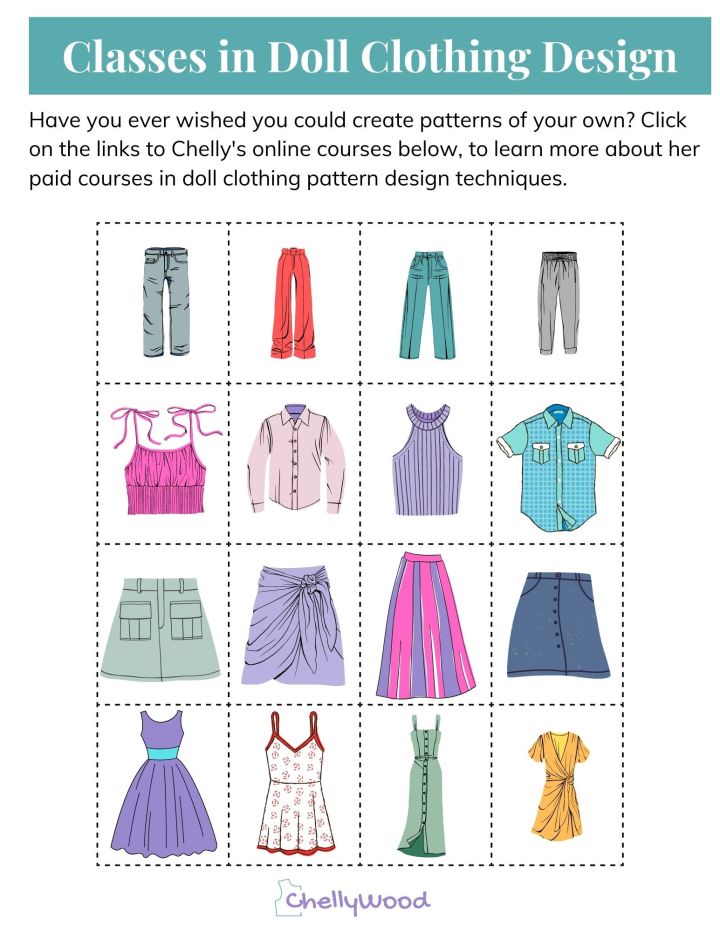
For any class on the C&T Publishing website, you don’t have to follow a schedule. Just sign up when you’re ready.
It’s a one-time fee for the course, and there’s no specific time limit to finish your course. You can just take your time and learn at the pace that suits you. So go check out my paid courses on the C&T Pub site, using this link.
As always, feel free to share my patterns and tutorials on social media. I only ask that you please let people know about my free doll clothes sewing pattern website, to help spread the word.
To read more about my free sewing patterns and tutorials, please visit the “Helpful Tips” page.
Disclaimer/Credit/Affiliate Marketing Link:
*Please note: when you click on links to various merchants on this site and make a purchase, this can result in this site earning a commission. Affiliate programs and affiliations include Amazon, Etsy, and the eBay Partner Network. As an Amazon affiliate, I earn from qualifying purchases. To learn more about how my website uses affiliate marketing, please visit the website’s Privacy Policy page.
Chelly Wood and the ChellyWood.com website are not affiliated with any of the doll or toy companies mentioned in this blog post, but Chelly enjoys designing her doll clothes to fit a variety of dolls. To learn more about the doll companies mentioned in today’s post, please visit the doll or toy company’s website.