


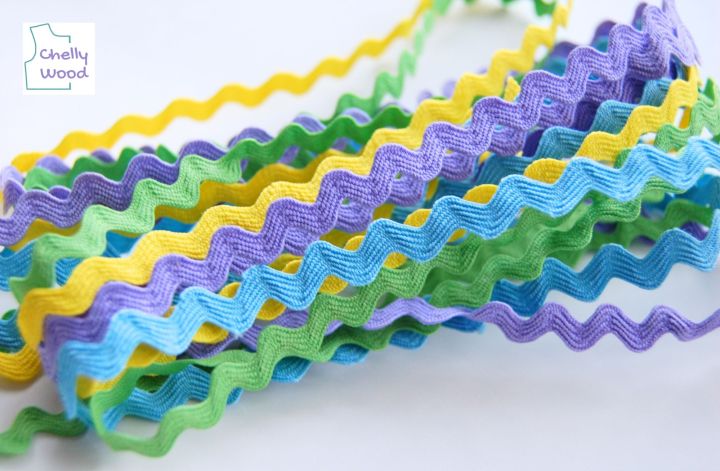
I never used to think of myself as an “expert” at something like this, but over the years, I’ve come to realize that even as a young seamstress, I had a knack for coordinating solids and prints, rickrack and bias tape, lace and ribbon, etc. especially when it came to making doll dresses.
So in today’s blog post, I’m going to share my own technique for choosing trims, but at the end of the blog post, I’ll have some questions for you as well. Please leave comments to let the rest of us know what your technique entails.
Before I go on, I need to make my required disclaimer statement: As an Amazon affiliate, I earn from qualifying purchases. To learn more about how affiliate marketing works on my website, please go to the Privacy Policy page. Thank you!

Before I even look at my pattern, I always consider the size of the doll. The patterns I was working with in today’s blog post come from McCall’s 8531 for a Mattel Francie doll, one of my all-time favorite “Barbies,” if you can call her that.
For dolls 12 inches tall and smaller, you really want to use small notions — as small as you can find — so it doesn’t look wonky and weird on the doll. One-inch wide rickrack, for example, will look really strange on a doll like Francie.
Next, I read the instructions to answer the question, “Where am I going with this project?” I take into consideration what the pattern designer had in mind before I choose my notions. That’s because I almost always make some alterations, and I’ve found that matching notions with a garment you plan to alter requires an understanding of each step in the sewing process. Without that understanding, you may have to live with some regrets.

Now this may sound crazy, but I don’t go out and buy notions very often. Most of the time, I rely on the notions I already have in my stash. So yeah, the price of a notion is important, but for me, I make a lot of my notion choices based entirely on the availability of the notion.
So, for example, in Figure 5 above, I started with the floral grosgrain ribbon that you see there. Then I asked myself, “What color of fabric will look good with this ribbon?” I already had that grosgrain ribbon in my stash, so even though the back of the pattern recommends 1/2 yard of 1/4 inch wide satin ribbon, I was using about a foot or so of 3/4 inch grosgrain. Why? Because that’s what was available in my stash!
Does trim size matter? Yeah. To some extent, it does. Like I said earlier, one-inch wide rickrack is going to look odd on Francie, but the “brick red” medium sized rickrack — which is about 1/2 inch wide will work okay. Baby rickrack would look better, as the envelope suggests, but 1/2 inch wide is do-able.

Next I lay out my garment pieces on a cutting mat, exactly like you see in Figures 6 and 7 above. I lay the notion across the part of the garment where I want to attach it, taking into consideration the garment’s original design and any alterations I plan to make to that design.
I ask myself, “Will the alteration I plan to make change the way this trim will look on the finished garment?” And I give it my best guess, trying out various notion options until I come up with one I like. For example, when I was making these Francie dress projects, I did have white baby rickrack in my stash, but when I laid it across that tan Christmas print fabric, it didn’t look as good as the red medium width rickrack. So I went with the latter.
And finally, I ask myself, “Where, on the final garment, does this notion belong?” And if I’m making changes from the envelope’s recommended notions, will I need to also change the location of that notion?


As you can see in the image above, I placed my red rickrack in the exact same spots as the original View C dress’s rickrack: along the collar and at the gathered areas mid-sleeve.
Was I happy with how this turned out? Meh. It’s okay.
I honestly considered putting a strip of rickrack across the bottom of the dress instead of the sleeve location, and with hindsight being 20/20, I think that would have looked a lot nicer.
And that’s what I meant when I said, “… you may have to live with some regrets.”
Questions: How do you choose your notions? Do you always go with what it says on the envelope? Or do you experiment? Do you start with what you already have in your stash? Or do you buy notions to fit the project you’re working on?
Please leave your answer to these questions in the comments section. I really, truly enjoy learning from you guys as much as (if not more than) you enjoy reading what I have to say on a topic like this!


Here’s a list of notions you may want to experiment with, when sewing for your own dolls:
- 1/8 inch ribbon on Etsy
- 1/8 inch ribbon on Amazon
- 1/4 inch ribbon on Etsy
- 1/4 inch ribbon on Amazon
- 1/2 inch ribbon on Etsy
- 1/2 inch ribbon on Amazon
- Velvet ribbon
- lace trim
- mini pom-pom trim
- rickrack trim
- floral lace trim
- 1/4 inch double fold bias tape
- gold braid trim
This list comes from my “Buyer’s Guide” page, which is easily accessed from the home page.
You may also learn a lot about notions by watching one of these videos:
- How to sew snaps on fabric
- How to use a needle threader
- How to use bias tape
- How to choose fabric
- How to measure a doll
- How to press seams open, using a hot iron
- How to sew rickrack
- How to use selvage
- How to attach ribbon to doll clothes
- Tips on sewing with lace
- How to add a ruffle to a skirt
For my free tutorials, be sure to subscribe to my YouTube channel, ChellyWood1.


Here are 3 ways you can help support my website and YouTube channel:
- Leave a comment on any blog post on my site (it helps other people find my website)
- Leave comments on my YouTube channel (it also helps with search engine optimization)
- Subscribe to my YouTube channel if you haven’t already
To read more about my free sewing patterns and tutorials, please visit the “Helpful Tips” page.
Disclaimer/Credit/Affiliate Marketing Link:
*Please note: when you click on links to various merchants on this site and make a purchase, this can result in this site earning a commission. Affiliate programs and affiliations include Amazon, Etsy, and the eBay Partner Network. As an Amazon affiliate, I earn from qualifying purchases. To learn more about how my website uses affiliate marketing, please visit the website’s Privacy Policy page.
To honor the trademark rights of the doll companies and pattern companies mentioned in this blog post, I am including links to their websites here. Please feel free to visit their website and consider making a purchase.
Francie dolls are products offered by Mattel, which holds the registered trademark for them (™). Please visit the Mattel Toys website to learn more about their company and its trademarked toys.
Chelly Wood and the ChellyWood.com website are not affiliated with the pattern company or companies mentioned in this blog post, but Chelly finds inspiration in the doll clothes designed by these pattern companies. To purchase patterns from Simplicity, McCall’s, Butterick, Vogue, or other pattern companies shown and discussed in this blog post, please click on the links provided here. These links below the “Disclaimer” section do not help raise money for this free pattern website; they are only offered to give credit to the company that made these patterns.